 Windows 7 and 8 users might just be able to upgrade for free to Microsoft’s revamped Windows 11 – the rumored next step for Windows 10 – when the latter emerges later this year. That’s the theory according to Windows Latest, which has been digging around in the leaked build of Windows 11 which recently surfaced, and found references to these older Windows operating systems in the product key configuration reader. The material uncovered there suggests there will be an upgrade path for both Windows 7 and Windows 8/8.1 to make the leap to Windows 11 for free. This kind of makes sense, because as you’re doubtless aware, it’s still possible for those on Windows 7 or 8 to upgrade to Windows 10, even though the official free upgrade was only supposed to last for the first year of the latter’s existence. That free upgrade never went away in fact – we discuss how you can avail yourself of it right here – and as Windows 11 is still fundamentally Windows 10, just with a lot of interface changes and a big facelift (from what we can see in the leaked build), it’s not surprising that the scheme of things might remain in place when it comes to upgrades. Then again, arguably the launch of the revamped OS, which is a visible step on from Windows 10, would make the perfect moment for Microsoft to finally kill off free upgrades for those on older Windows versions – just because it’s drawing a clear line in the sand. Also, we should remember that we’re going off what’s just a leaked preview of Windows 11, and the finished product may differ, with these configuration bits and pieces potentially being tidied away closer to release. As always in these situations, we’ll just have to wait and see, but given that Microsoft has held the door open – or perhaps that should be the window open – for older versions for some six years now, it’d be no surprise to see the software giant continue to do so. Five years is a long time to let upgrade loopholes slide, after all, and it’d seem that Microsoft perhaps made a decision that it’s more important to get user numbers and drive adoption of Windows than it is to make money off selling licenses to upgrading punters. And of course it’s not like sales aren’t still coming in from new PCs with Windows on board. If the free upgrade theory does turn out to be true for Windows 11 when it purportedly hits later this year, another question is whether Microsoft might make this an ‘official’ offer again – presumably with a time-limit, and perhaps a final one this time – or will it just continue to be an unofficial upgrade path, as with Windows 10 right now? Another point to bear in mind here is that Microsoft will obviously want Windows 11 to be seen to have a successful launch, and to be a popular move, so driving up adoption numbers with the freebie upgrade might help in framing that perception. Indeed, this could be another argument for a fanfare – and big push – around an official upgrade offer being implemented once again, however unlikely that may seem on the face of it. Via techradar 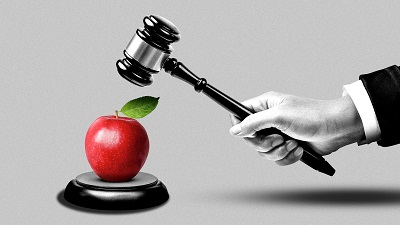 Germany on Monday opened an investigation against Apple over anti-competition practices, making the iPhone maker the fourth US tech giant to be hit by such probes. The antitrust authority had in recent weeks opened similar investigations against Amazon, Google, and Facebook under a new law that took effect in January giving regulators more powers to rein in big tech companies. The watchdog said it has initiated the first stage of the probe to determine if Apple has "cross-market significance". "An ecosystem extending across different markets can be one indication of such a position held by a company," said the authority. "Such positions of power can make it very hard for other companies to counter it." Andreas Mundt, who heads the Federal Cartel Office, said his service will look at whether Apple has established such a digital ecosystem across several markets around the iPhone with its proprietary operating system iOS. "A key focus of the investigation will be the operation of the App Store because in many cases, it empowers Apple to have an influence on the business activities of third parties," he added. An Apple spokesperson underlined the company's contribution to the employment market in Germany, saying its iOS app economy supported 250,000 jobs. "We look forward to discussing our approach with the FCO and having an open dialogue about any of their concerns," said the spokesperson in a statement. Following the first stage of the probe, the cartel office said it might then look at other specific issues after it received complaints from "several companies against potential anti-competitive practices." This included a complaint against the company's alleged tracking restrictions of users in connection with the introduction of the iOS 14.5 operating system. It added that complaints had also been filed by app developers disputing the usage of Apple's system for in-app purchases. Germany's tougher stance against the digital giants came after new EU draft legislation unveiled in December aimed at curbing the power of the internet behemoths that could shake up the way Silicon Valley can operate in the 27-nation bloc. The push to tighten legislation comes as big tech companies are facing increasing pressure around the globe, including in the United States, where Google and Facebook are facing antitrust suits. Besides looking at the reach of the companies, scrutiny often extends to privacy issues. In its investigation targeting Google, for instance, the German cartel office said it was examining if consumers who wish to use the search engine giant's services "have sufficient choice as to how Google will use their data". The multinationals are also facing a crackdown from Western governments seeking to claw back taxes which they fear had been channeled unfairly into tax havens. Germany and France have joined calls from the United States to impose a global minimum corporate tax of at least 15 percent, a move that targets multinationals like Amazon and Google. Follow this thread on OUR FORUM.  A weakness in the algorithm used to encrypt cellphone data in the 1990s and 2000s allowed hackers to spy on some internet traffic, according to a new research paper. The paper has sent shockwaves through the encryption community because of what it implies: The researchers believe that the mathematical probability of the weakness being introduced on accident is extremely low. Thus, they speculate that a weakness was intentionally put into the algorithm. After the paper was published, the group that designed the algorithm confirmed this was the case. Researchers from several universities in Europe found that the encryption algorithm GEA-1, which was used in cellphones when the industry adopted GPRS standards in 2G networks, was intentionally designed to include a weakness that at least one cryptography expert sees as a backdoor. The researchers said they obtained two encryption algorithms, GEA-1 and GEA-2, which are proprietary and thus not public, "from a source." They then analyzed them and realized they were vulnerable to attacks that allowed for decryption of all traffic. When trying to reverse-engineer the algorithm, the researchers wrote that (to simplify), they tried to design a similar encryption algorithm using a random number generator often used in cryptography and never came close to creating an encryption scheme as weak as the one actually used: "In a million tries we never even got close to such a weak instance," they wrote. "This implies that the weakness in GEA-1 is unlikely to occur by chance, indicating that the security level of 40 bits is due to export regulations."Researchers dubbed the attack "divide-and-conquer," and said it was "rather straightforward." In short, the attack allows someone who can intercept cellphone data traffic to recover the key used to encrypt the data and then decrypt all traffic. The weakness in GEA-1, the oldest algorithm developed in 1998, is that it provides only 40-bit security. That's what allows an attacker to get the key and decrypt all traffic, according to the researchers.A spokesperson for the organization that designed the GEA-1 algorithm, the European Telecommunications Standards Institute (ETSI), admitted that the algorithm contained a weakness, but said it was introduced because the export regulations at the time did not allow for stronger encryption."We followed regulations: we followed export control regulations that limited the strength of GEA-1," a spokesperson for ETSI told Motherboard in an email.Håvard Raddum, one of the researchers who worked on the paper, summed up the implications of this decision in an email to Motherboard. Raddum and his colleagues found that GEA-1's successor, GEA-2 did not contain the same weakness. In fact, the ETSI spokesperson said that when they introduced GEA-2 the export controls had been eased. Still, the researchers were able to decrypt traffic protected by GEA-2 as well with a more technical attack, and concluded that GEA-2 "does not offer a high enough security level for today's standards," as they wrote in their paper. Lukasz Olejnik, an independent cybersecurity researcher and consultant who holds a computer science PhD from INRIA, told Motherboard that "this technical analysis is sound, and the conclusions as to the intentional weakening of the algorithm rather serious." The good news is that GEA-1 and GEA-2 are not widely used anymore after cellphone providers adopted new standards for 3G and 4G networks. The bad news is that even though ETSI prohibited network operators from using GEA-1 in 2013, the researchers say that both GEA-1 and GEA-2 persist to this day because GPRS is still used as a fallback in certain countries and networks. "In most countries, [the risk is] not very high, and significantly lower risk than at the start of the 2000’s since GEA-3 and GEA-4 are used today," Raddum said. "But handsets still support GEA-1. Scenarios where a mobile phone today can be tricked into using GEA-1 exist." You can always get better informed when yu visit OUR FORUM.
|
Latest Articles
|