 If you told to be back in 2013 that this generation would see first-person shooters return to frenetic retro experiences as tongue-in-cheek was they were colorful, I’d tell you to stop making shit up. Doom 2016 was the start of realizing that dream: the return to form for id Software’s iconic “daddy-of-first-person-shooters” was also the return of an often sidelined method of presenting an FPS. If you thought that 2016’s return to the demon-infested UAC was the true return to Doom, you haven’t played anything like Doom Eternal. While four years ago we were treated to a smidge of what the series could be again – complete with gruesome combat and pumping heavy metal – Eternal’s amp has been cranked up not just to eleven, but away past it. While the last outing of the demon-massacring Doom Slayer ended with the raging marine being sent back to Hell, Eternal instead begins with everyone’s favorite angry-man tackling the rise of the demon horde on Earth. It begins immediately: after steadily shooting your way through a few linear paths, the open combat arenas begin to show their antsy faces. Eternal’s first combat arena is by sure it’s smallest, but it makes a hectic first impression. In comparison to its older brother, this beginning section feels like a mid-game gore nest from Doom 2016. There are imps, zombie soldiers and even an Anachnotron to deal with. For the beginning of a game, Eternal holds no punches and as the game continues its arenas only get bigger, more populated and tougher. That’s not to say that Doom Eternal ever becomes too difficult. We played through the entire campaign on Ultra-Violence, this series’ version of hard mode. As the horde of demon foes expands to include Pinkies, Mancubi, Cacodemons, Tyrants, Archvilles and more, your arsenal of weapons will expand alongside them. As you speedily skate out of the training level, Doom’s combat becomes an eloquent display of ultra-violent gunplay amid grotesque homogenized environments that see their base design overwrought by the unstoppable infection of Hell. The strong core of 2016 lays the unshakable combat foundation that Eternal gleefully builds upon to craft the best shooter this generation has seen. Each combat arena no longer feels like a beautifully choreographed dance; each fight is more akin to a glorious display of freeform combat parkour as you hastily rush to change your direction and approach in a split second. Your core movements of double jumps, mantling, boost-dodging, wall-climbing, and monkey-bar-swinging are constantly in use as you skate around vast demonic warzones and blast away at the ever-oncoming danger. Every gun, from shotgun to plasma rifle to rocket launcher, shreds away the flesh of your foes. Every bullet that blasts against the hardened flesh of the demons takes away a chunk of its target. Eventually, as larger targets with more health take center stage, their bodies become horrifying walking carcasses. It’s a gruesome, barbarous addition that never needed to be added, but it makes combat so much more visceral. There's more to this review posted on OUR FORUM.
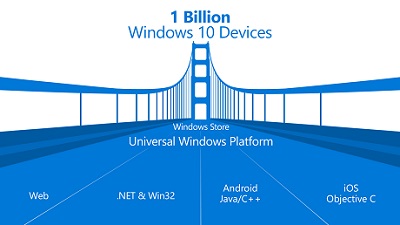 From the launch of Windows 10, our focus was on moving people from having to choose, to loving Windows. With the release of every new build of Windows 10, we have seen customer satisfaction improve as we have made fixes and added new capabilities and experiences. We are humbled that customers are choosing and loving Windows 10, and there has never been a more important time for a secure, reliable platform that can empower people to create, educate and communicate wherever they are. Today we’re delighted to announce that over one billion people have chosen Windows 10 across 200 countries resulting in more than one billion active Windows 10 devices. We couldn’t be more grateful to our customers, partners, and employees for helping us get here. One in every seven people on the planet is planning, creating, ideating, executing, moving, shaking and doing great things with Windows 10. Because no matter who or where in the world or life they are, Windows 10 provides them with the features and flexibility they need to achieve more. From the high-powered developer who needs the most advanced technology available to the business professional who needs to be productive at work and home, to the student in a developing market who is looking for a low-cost device for learning and self-improvement—Windows 10 is the platform to meet all these needs. With 100% of the Fortune 500 now using Windows 10 devices, it has become a critical platform for driving business transformation in the enterprise and beyond. As companies transition from Windows 7 to Windows 10, they are making a commitment to running their business more efficiently, more securely, and positioning themselves to offer better products, services, and solutions to their customers. New Windows 10 features and security updates are now delivered faster than ever before. We’ve evolved from releasing a version every three years, to releasing multiple versions per year. And with the recent decoupling of the new Chromium-based Edge browser from Windows 10, we can now deliver new builds to customers outside of the normal Windows 10 release cadence—and to more versions of Windows. With Windows 10, our focus has always been to put the customer at the center, to listen to feedback, and to have that feedback shape the development process. One of the strongest examples of this customer focus is our Windows Insider Program which now has over 17.8 million Insiders, with members in every country of the world. We have also strived to make Windows an open, inclusive and accessible platform that can empower everyone to achieve their goals. Our Windows Accessibility team focuses on human-centered design, a method where engineers and designers work to deeply understand peoples’ needs, and then co-design and continuously iterate on solutions directly with them. Learn more by visiting OUR FORUM.  The Folding@home distributed computing project has added twenty new Coronavirus (COVID-19) projects since earlier this week that uses donated CPU power to research new treatment methods. Folding@home allows researchers to use donated CPU cycles to simulate protein folding to research new drug opportunities against diseases and a greater understanding of various diseases. Last week, we reported that the three new projects (11741, 11742, and 11743) that were being used to research the COVID-19 virus and how to create potential drug therapies. Since we last looked on March 9th, 2020, researchers from Memorial Sloan Kettering Cancer Center, Washington University in St. Louis, and Temple University have added 20 new projects, for a total of 23, that are all being used to analyze the proteins of Coronavirus virus. "To help tackle coronavirus, we want to understand how these viral proteins work and how we can design therapeutics to stop them," Folding@home's announcement stated.If you want to check what project you are currently working on or change some of the program's settings via a web GUI, you can select the 'Web Control' option as shown in the image above. This will open a web page showing your current work-in-progress, your settings, and the project ID you are currently contributing your CPU cycles to. To support Coronavirus projects, make sure to support research fighting 'Any Disease'. After determining the project ID number, you can look up the project ID you are working on here. For example, in the image above you can see that the project ID is 14315, which is for Cancer research. The Folding@home project has said that due to the increasing interest in the project and CPU cycles being donated, it may take some time before you receive a job to work on. "Each simulation you run is like buying a lottery ticket. The more tickets we buy, the better our chances of hitting the jackpot. Usually, your computer will never be idle, but we’ve had such an enthusiastic response to our COVID-19 work that you will see some intermittent downtime as we sprint to setup more simulations. Please be patient with us! There is a lot of valuable science to be done, and we’re getting it running as quickly as we can," Folding@home stated. If you have an idle computer sitting around doing nothing, please contribute it to the project. Who knows, the data you are assigned and solve could be what helps to create a cure! Learn more and to donate visit OUR FORUM.
|
Latest Articles
|