 The US Federal Communications Commission last month put restrictions on US rural carriers, which rely on Huawei to deliver internet, phone and other services. Huawei criticised the decision as unconstitutional. Huawei has launched a legal bid to fight a decision by US regulators to shut it out of the American market. Speaking at a press conference at Huawei headquarters in Shenzhen on Thursday, Chief Legal Officer Song Liuping said the company had filed a petition with the Fifth Circuit Court of Appeals in New Orleans to challenge the US Federal Communication Commission (FCC). Read more: Huawei Sues US Regulators Over Ban on Rural Carriers Using Federal Subsidies  Twitter’s new terms of service, may ‘limit visibility’ of some users. Twitter’s new terms of service will allow the platform to “shadow ban” users – secretly suppressing their content. While critics have long suspected the company of doing it, the new rules appear to make the practice official. Taking effect in January 2020, Twitter’s new terms initially don’t look like much to write home about, but some tweaks to the language could have larger repercussions for users, limiting their reach behind the scenes without their knowledge. “We may also remove or refuse to distribute any Content on the Services, limit distribution or visibility of any Content on the service, suspend or terminate users, and reclaim usernames without liability to you,” the new terms state (emphasis added). With the addition of those four words, the company is telling users it reserves the right shadow ban or “throttle” certain accounts. On what basis will it make those decisions – or whether they will be made solely by an automated algorithm – remains unclear. While Twitter has previously insisted point-blank “We do not shadow ban,” in the pre-2020 terms the company split hairs between shadow banning and “ranking” posts to determine their prominence on the site, and acknowledged deliberately down-ranking “bad-faith actors” to limit their visibility. Read more: ‘Shadow banning’ written into Twitter’s new terms of service. 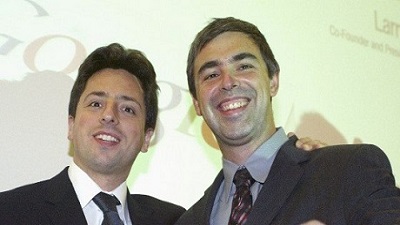 Alphabet CEO Larry Page announced Tuesday that he will step down from the position. Google CEO Sundar Pichai will take over as CEO of the parent company in addition to his current role. Co-founder Sergey Brin will also step down as president of Alphabet and the role will be eliminated. Alphabet’s stock was up as much as 0.8% after hours. “With Alphabet now well-established, and Google and the Other Bets operating effectively as independent companies, it’s the natural time to simplify our management structure,” Page and Brin wrote in a blog post announcing the change. “We’ve never been ones to hold on to management roles when we think there’s a better way to run the company. And Alphabet and Google no longer need two CEOs and a President.” Page became CEO of Alphabet in 2015 when Google reorganized to form the new parent company to oversee its “Other Bets” outside of its main search and digital ads businesses. Page had previously served as CEO of Google. Under the new structure, Pichai became CEO of Google after effectively running much of the business as Page had taken a step back to focus on big-picture endeavors. Pichai had previously led Android and Chrome at the company. Both Page and Brin will remain “actively involved” as members of Alphabet’s board, according to the letter. The co-founders still have controlling voting shares of the company. Page holds about 5.8% of Alphabet shares, Brin controls about 5.6% and Pichai holds about 0.1%, ensuring the new CEO may still be challenged by the company’s founders. Google said its voting structure is not changing in light of the announcement. Alphabet may need to lean more heavily on its other bets, which include companies like Waymo and Verily, as its core digital advertising business run by Google shows signs of slowing down. Google showed slowing ad revenue in its first quarter of 2019 and lower profit compared to the previous year during the third quarter. The company has still struggled to generate significant revenue in hardware, although its cloud business is growing. Page and Pichai have overseen the company during a tumultuous few years as Google employees have voiced their discontent with company policies. Thousands of Google employees walked out of offices around the world last year to protest a $90 million exit package Google reportedly paid to former Android leader Andy Rubin despite finding sexual misconduct claims against him to be credible, a New York Times investigation revealed. Alphabet’s board has opened an investigation into how executives have handled claims of sexual misconduct, CNBC reported last month. Google has been forced to back off certain projects that have pushback from employees. In 2018, Google’s cloud chief at the time said the company would not renew its contract with the Department of Defense after it was set to expire in March 2019. The decision followed a petition signed by thousands of employees urging Pichai to keep Google out of the “business of war.” Google employees have also urged the company to back off its plans to build a censored search engine for China after The Intercept reported on the plans cryptically called Project Dragonfly. There's a lot more posted on OUR FORUM. |
Latest Articles
|