 Google is facing another internal crisis as employees demand answers from executives on how the company works with US immigration services. Workers have pressed management on whether the company will offer cloud services to Customs and Border Protection (CBP), concerned that their labor could be used to power Trump administration policies. But according to documents obtained by The Verge, similar deals are already in place that shows how lucrative and lasting those agreements can be. In 2017, a third-party software provider reached a nearly $750,000 deal to provide a Google cloud service to US Citizenship and Immigration Services (USCIS), a branch of the Department of Homeland Security. The contract was obtained through a Freedom of Information Act request by the activist group Mijente, which has pushed back on tech companies working with US immigration agencies. The document does not directly mention Google, but the contract provides a two-year license for Apigee Edge Private Cloud, part of a Google service for managing APIs. The contract was signed in September 2017, suggesting the service is still in use. While USCIS is seen as the bureaucratic counterpart to agencies like Immigration and Customs Enforcement (ICE) and CBP, responsible for managing asylum claims and related duties, the agency isn’t without controversy. Earlier this month, after the announcement of a Trump administration policy that would make it more difficult for poorer immigrants to become American citizens, acting director Ken Cuccinelli suggested changing the sonnet etched on the Statue of Liberty to “give me your tired and your poor who can stand on their own two feet and who will not become a public charge.” Wanna know more, please visit OUR FORUM. 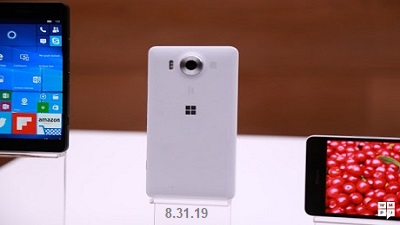 If there’s one thing that Microsoft mobile fans want, it’s a phone from Microsoft. Without Windows phones, there are few options. The Galaxy Note 10 and other Samsung flagships are obvious choices for a Microsoft supported mobile in spirit. Yet, the desire is strong for a Microsoft Surface-like experience albeit with Android. It’s an alluring fantasy, but a fantasy nonetheless. Microsoft’s previous mobile efforts have been met with disaster. Windows Mobile failed to take off, Windows Phone/Windows 10 Mobile died in the crib, and Windows RT was similarly unsuccessful. There’s a compelling school of thought that says, why doesn’t Microsoft do what others have. Why not adopt Android? Much like with its Surface Pro line, you’d be pairing powerful hardware with software that people actually want. You’d get Microsoft hardware and software support, along with access to Android and the Google Play Store (and the US government’s unlikely to rip it out of your hands as well post-purchase.) It seems like a no-brainer, but its a lot more complicated than that. For Microsoft to be able to justify this thing (to users and bean counters both), it’s going to have to solve a unique problem that the market isn’t catering to at the moment. Microsoft’s brand alone is not enough to carry sales of a device. No, if Microsoft is releasing such a mobile phone, it would have to do so with a USP. A problem it intends to do solve that’ll draw a niche where it can build off on – else it’s just another Android Phone. One route they could take is the camera. Aside from the reputation of Lumia, Microsoft was making cool camera apps like Blink and Qik even before the Nokia purchase. To learn more visit OUR FORUM.  Relatively new on the ransomware scene, Sodinokibi has already made impressive profits for its administrators and affiliates, some victims paying as much as $240,000, while a network infection netted $150,000 on average. These figures are not surprising when you look at the malware's recent activity. On August 16, Sodinokibi hit 22 local administrations in Texas and demanded a collective ransom of $2.5 million. It compromised multiple MSPs (managed service providers) spreading the malware to their customers. The latest victim is another MSP that offers data backup service to dental practices. The ransom, in this case, is allegedly $5,000 per client; hundreds were impacted. Since its discovery in April, Sodinokibi (a.k.a. REvil) has become prolific and quickly gained a reputation among cybercriminals in the ransomware business and security researchers. In mid-May, a Sodinokibi advertiser using the forum name UNKN deposited over $100,000 on underground forums to show that they meant serious business. Advertisements for the new file-encrypting malware started in early July on at least two forums. UNKN said that they were looking to expand their activity and that it was a private operation with "limited number of seats" available for experienced individuals. A screenshot of the announcement, provided to BleepingComputer by malware researcher Damian shows that UNKN describes the malware as being "private ransomware" flexible enough to adapt to the RaaS business model. The name of the ransomware is not disclosed in the forum posts but the researcher told us that he saw screenshots of the malware's administrative panel showing bot IDs that look the same as those for Sodinokibi. As seen in the screenshot below, one victim paid 27.7 bitcoins, which converted to more than $220,000 at the time of the transaction. Get deeper into this by visiting OUR FORUM. |
Latest Articles
|