 The increase, set to take effect later this year, is likely designed to push users to move to Office 365 or Microsoft 365 subscriptions. Microsoft plans to raise the price of its perpetually-licensed Office suite by 10% in October. The increases are part of a larger strategy, said Wes Miller, an analyst and licensing expert with Directions on Microsoft. "If you add all of these motions up, and look at other lightly-announced price increases, it clearly points towards encouraging customers that have avoided licensing Office 365, or now Microsoft 365, to...look again," Miller tweeted. Microsoft announced the price increase on its partner network website on Wednesday. "Office 2019 commercial prices will increase 10% over current on-premises pricing," the company said. According to a separate FAQ (download PDF), the Office 2019 price jump "represent(s) the significant value added to the product over time and ... better reflect costs and customer demand and align with cloud pricing. 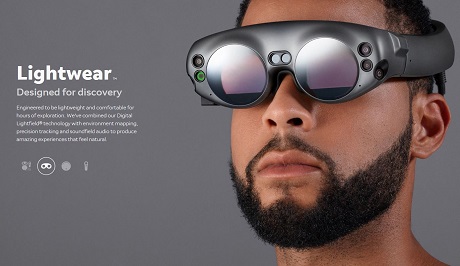 The number 1 issue of the Microsoft HoloLens and most mixed reality devices is the field of view, which is closely tied to immersion level. Having your virtual objects being cut off and disappearing when you turn your head slightly does nothing for making you feel they are really there. The Magic Leap headset promised to revolutionalize mixed reality but has been extremely secretive about that aspect, including commenting out the information from its recently released developer documentation. Unfortunately, as many governments discovered, that is usually not the best way to hide information from digital documents, and Next Reality managed to restore the details, finally revealing exactly how much the virtual world will fill your field of vision. The news is a combination of good and bad – the field of view is significantly bigger than the Microsoft HoloLens, but still far from immersive. Magic Leap One’s FoV is a third larger horizontally and nearly double the vertical value of the Microsoft HoloLens, and therefore approximately 45% bigger overall. It is likely that HoloLens 2 will improve significantly on this number, however, making Magic Leap’s lead pretty short lived. Full details are posted on OUR FORUM. Polish company MedApp is using the Microsoft HoloLens to bring expert specialist medical opinions to even the most remote clinics in the world. Using the augmented reality that HoloLens provides, MedApp’s Carna Life app helps cardiologists “visualize an individual patient’s heart as it beats in their chest in real time,” said Ralf Saykiewicz, Supervisory Board Chairman at MedApp. “We utilize the HoloLens system, which gives cardiologists the ability to see the heart before they open your chest. This diminishes the time needed to perform open-heart surgery.” “We are using the tools in Microsoft Azure to develop a very advanced system of patient-generated data, of cardiac monitoring, diabetic monitoring, as well as general monitoring of human well-being, and then to manage the population health for clinics and systems,” Saykiewicz said. MedApp CEO Mateusz Kierepka felt that a partnership with Microsoft has been instrumental to their success. “In every place where we’ve collaborated with Microsoft, whether it’s been in Dubai or Brussels, we’ve received the best possible technical support from specialists in Azure and artificial intelligence. Without this kind of support, it would be impossible for us to be where we are right now as a company,” he said. Although the company is based in Krakow, Poland, Saykiewicz said using Microsoft Azure allows them to serve customers globally. “Because we use Microsoft Azure Infrastructure as a Service, we’re really a global organization. We’re able to service clients all over the world without a physical presence there because we have the cooperation of Microsoft and the support of Azure.”Find more on OUR FORUM. |
Latest Articles
|