 The Evil Corp group, also known as the Dridex gang, has been active since 2007 when several members previously involved with the ZeuS banking trojan decided to try their own luck at distributing malware. Ther initial efforts were focused on distributing the Cridex banking trojan, a malware strain that later evolved into the Dridex banking trojan, and later subsequently evolved into the Dridex multi-purpose malware toolkit. Across the years, Evil Corp, through its Dridex operation became one of the largest malware and spam botnets on the internet. The group distributed their own malware, but also malware for other criminal groups, along with custom spam messaging. The group dipped their toes into ransomware distribution by spreading the Locky ransomware to home consumers throughout 2016. As the ransomware market began shifting targeting from home consumers to enterprise targets, the Evil Corp gang adapted as well, and after dropping the Locky strain for good, they created new custom ransomware named BitPaymer. The group used their vast botnet of computers infected with the Dridex malware to look for corporate networks and then deploy BitPaymer on the largest enterprise targets they could identify. The group operated BitPaymer between 2017 and 2019 when new infections started dropping off. The reasons are unclear, but the slowdown in BitPaymer infections may have also had something to do with the Dridex botnet slowing down its activity between 2017 and 2019. Fox-IT says that this slowdown culminated with the DOJ charges filed in December 2019. Following the high-profile indictments, the group went silent for a full month until January 2020. According to Fox-IT, the group came back to life in January and spurted a few malware campaigns, usually for other crooks, until March, when they again went silent. However, when the group returned to life for the second time in 2020, they did so with new tools. Fox-IT says the group created a new ransomware strain to replace the aging BitPaymer variant that they've been using since early 2017. The actual reasons for replacing BitPaymer are shrouded in mystery; however, Fox-IT, says this replacement appears to be a totally new ransomware strain, written from scratch. Fox-IT says it named this new ransomware WastedLocker based on the file extension it adds to encrypted files, usually consisting of the victim's name and the string "wasted." Security researchers say that an analysis of this new ransomware has revealed little code reuse or code similarities between BitPaymer and WastedLocker; however, some similarities still remain in the ransom note text. In an interview with ZDNet earlier today, Fox-IT says they've been tracking the use of this new ransomware family since May 2020. They say the ransomware has been exclusively deployed against US companies. "Ransom demands that are asked by Evil Corp are now typically into the millions," Maarten van Dantzig, Fox-IT security researcher, told ZDNet today. Want to know more please visit OUR FORUM. 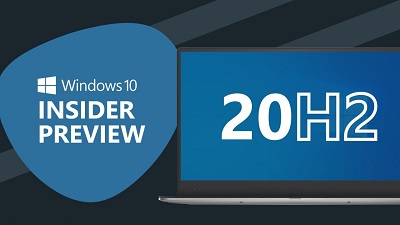 Microsoft has made it official: Windows 10’s next update will now be officially known as Windows 10 version 20H2 and it would be a minor release with a focus on quality improvements. Microsoft hasn’t revealed when users should expect Windows 10 20H2, the next feature update, but it’s likely that the rollout will take place during the usual October – November 2020 period or some earlier date. Microsoft is positioning the Windows 10 20H2 as not a full feature release with major changes or new features, but instead, the update is expected to include improvements, fixes, security or enterprise features, and quality enhancements. In Windows 10’s 20H2 update, you can expect general enhancements. For example, Microsoft will make further improvements to the Windows Search algorithm to reduce the indexing process when you actively use the system. Likewise, version 20H2 will also include the new Microsoft Edge. Windows 10 version 20H2 or Manganese update is going to be released to Windows 10 May 2020 Update systems in form of a small enablement package and it will bump the build number to 19042 from 19041. There’s another significant change in Windows 10’s fall 2020 update. According to Microsoft, Windows 10 version number that you see in Settings > System > About will no longer be actual numbers, which means version number will be the same as the codename. Typically, the version number incorporates the month and the year of when the update is finalized. Starting with 20H2, Microsoft plans to use the codename as the version number to accommodate the revised shipping date and avoid confusion. Windows 10 feature updates will still use a consumer-friendly name, such as November 2020 Update, if the update is released in November. Later this year, both Windows 10 version 2004 and version 20H2 will get the same cumulative update with an identical set of improvements. That’s because the Windows 10 version 20H2 is something more akin to a service pack than a proper feature update. As noted above, Microsoft hasn’t committed to an official release date for Windows 10 version 20H2 update to the millions of PCs who aren’t in the Insider beta testing program. For 19H2, we released bits to some Insiders with features turned off and released bits to some Insiders with featured turned on. In response to Insider feedback, we are not doing that for 20H2. Insiders who choose to download and install 20H2 on their PC will get new 20H2 features as they are delivered. Insiders in the Beta Channel who don’t choose to download and install 20H2 won’t see new features. Follow this upcoming release on OUR FORUM.  Will Microsoft’s Surface Duo be here three months earlier than expected? The latest leak suggests so, which means Redmond’s Android-powered duel screen hardware could be in a head to head with Samsung’s second iteration of the Galaxy Fold. Details on the accelerated release schedule have been reported by the team at Windows Latest: "Microsoft hasn’t told us much about the specs and release date of the Surface Duo, but according to internal sources, the tech giant is now planning to launch its first dual-screen Android phone before Samsung Galaxy Fold 2. This is the current target. "Microsoft is wrapping up development of the Surface Duo and is getting ready to launch its dual-screen Surface Duo before Samsung’s Galaxy Fold 2, which is expected to be announced in the first week of August.” There are two big and obvious caveats to this, but let’s assume Taniyama-Shimura and take the launch dates of the Galaxy Fold 2 and the Surface Duo as read. Samsung has been working its ‘Second Half’ launch event earlier and earlier over the years. Previously it was a week or so ahead of Apple’s iPhone launch, then there was clear space, and now there could be five weeks between the two events. That gives Samsung a clear run at the digital ink written in the smartphone space. The release of the device will likely be two to three weeks after the event, which which will keep all of Fold 2 sales (along with the premium Galaxy Note 20) in the reporting for the fourth calendar quarter. Into this comes Microsoft’s Surface Duo, its Android-powered folding device. While Microsoft is not pitching this as a smartphone, the media are going to see ‘folding’, ‘Android’, ‘phone’, and ‘big names competing with each other’, and the story angles are obvious. When the Surface Duo was introduced in October 2019, the release date was not locked in, instead, we had ‘The Holidays 2020’, heavily suggesting the fourth quarter of the year. That long gap between reveal and release has allowed Microsoft to do much of the development in public, and the occasional leaked images of the device - notably on the desk of Microsoft’s Senior Director Frank Shaw while he tweeted he was working from home - have helped build up the excitement in the public. Changes could also be made to the SDK to allow for a folding device, along with commits to open source projects to support devices like the Surface Duo. It’s worth noting that the Surface Duo is not yet a mainstream device in the way that the Galaxy Fold 2 is. Perhaps it should be treated in the same way - the Surface’s bread and butter come from the Surface Pro and Surface Laptop machines - with a bit of high end from the Surface Book family. But we all know that’s not going to be the case. The Surface Duo is going under the metaphorical microscope. And if Microsoft’s Surface team has the confidence to launch it earlier than expected, we have a classic case of under-promising and over-delivering. Assuming it delivers… Given the issues Samsung faced when it launched the first Galaxy Fold, that’s one comparison Microsoft will not want to be made. Check out OUR FORUM for more. |
Latest Articles
|